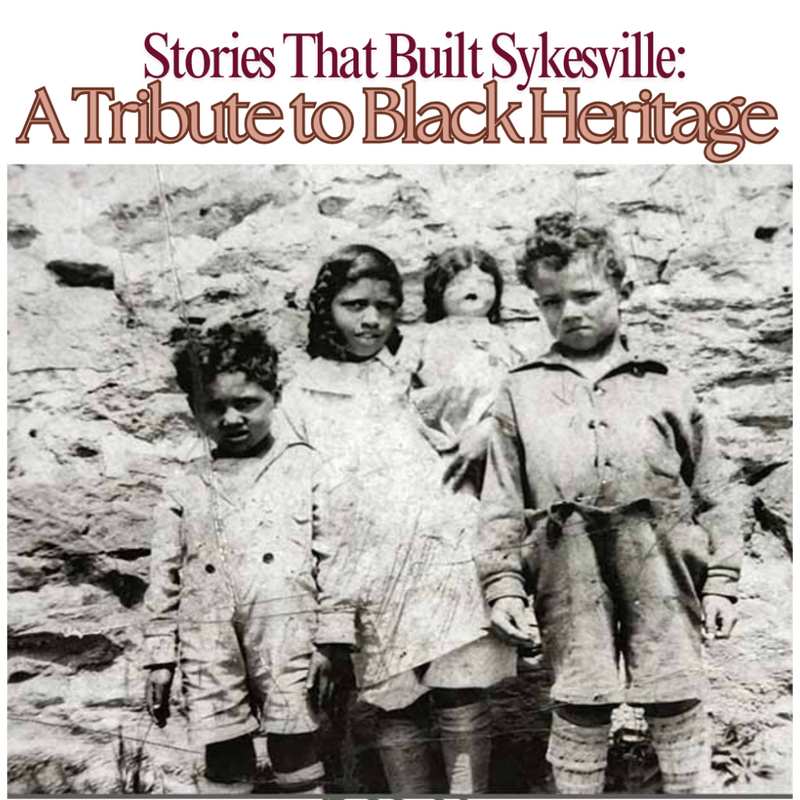
We invite you to join us on a journey—a journey long delayed for reasons rooted in painful truths: the flaws of humanity, the comfort of silence, and the ease of looking away. But that time has passed. Now, we are determined to confront the wrongs of the past, to shed light on the stories of the 13 Black families who settled in Sykesville. They built our town, grew with it, endured unimaginable challenges made even harder because they were Black.
This will be a journey of beauty and truth, one that unfolds piece by piece. We’ll continue to add to this page, sharing more about these untold stories—stories that began in chains. Chains that, though invisible today, persist in systemic injustice: unfair treatment, discrimination, police brutality, and more.
As a community, we have much work to do to break these chains. But every journey starts with a first step. Let ours begin here, with the stories of the Sykesville 13.
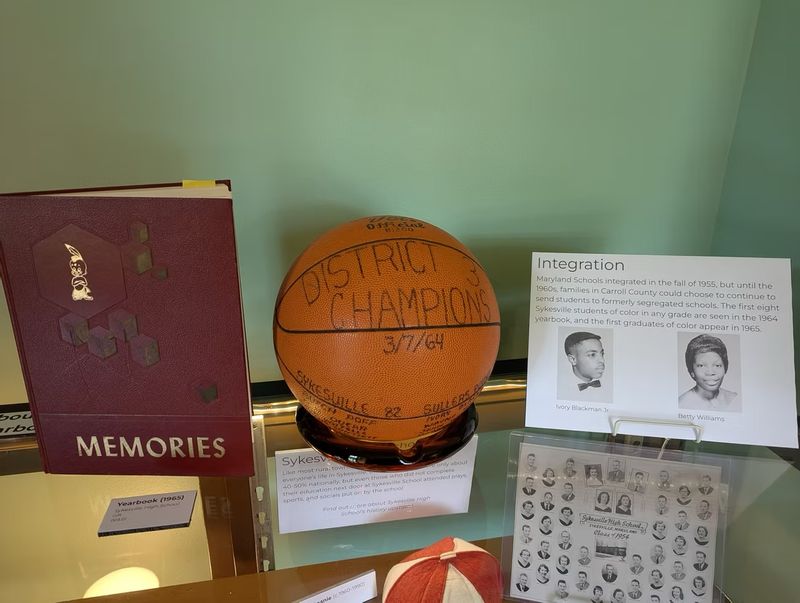
A key partner in preserving Sykesville’s Black history is the Gate House Museum of History, whose research has helped uncover stories that were long underrepresented or omitted from the historical record. Their work documents the presence, labor, and lived experiences of Black residents who contributed to Sykesville’s development—often without recognition.
Through photographs, archival records, and community knowledge, the museum has helped trace family histories, early Black neighborhoods, and the social fabric that shaped daily life in Sykesville. This research provides essential context for understanding how Black individuals and families helped build the town we know today.
The Downtown Sykesville Connection is proud to amplify and build upon this ongoing work as part of our Black Heritage Research Project. By connecting past research with new storytelling, we aim to ensure these histories are preserved, shared, and honored—now and for future generations.
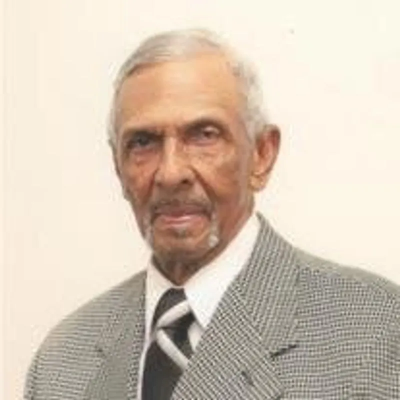
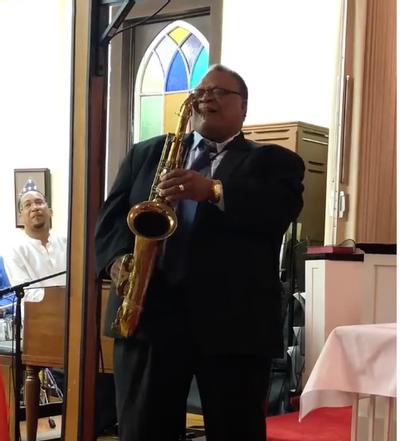
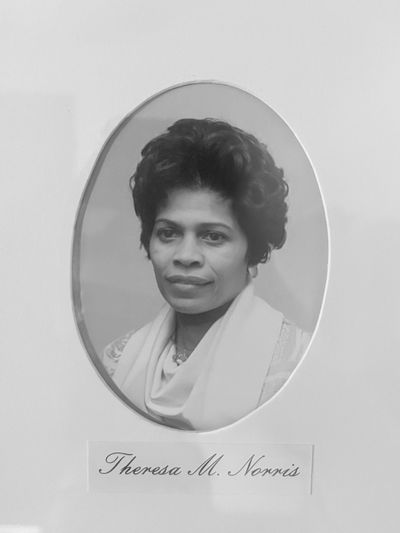
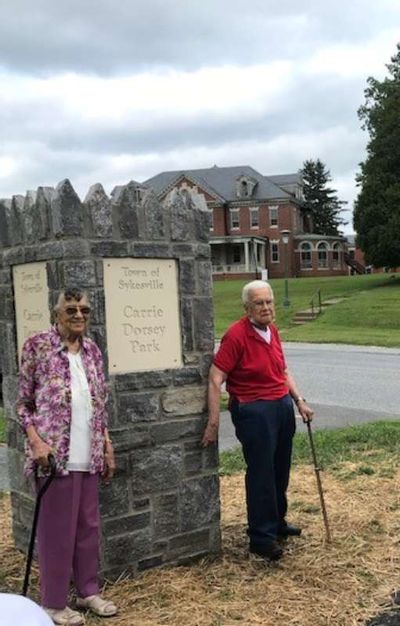
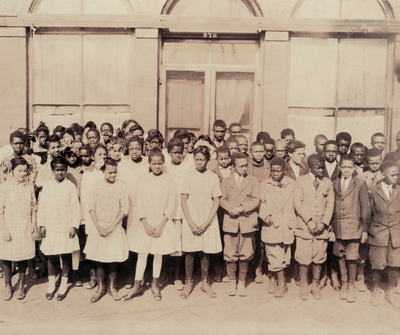

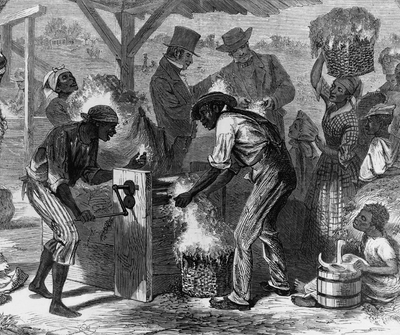
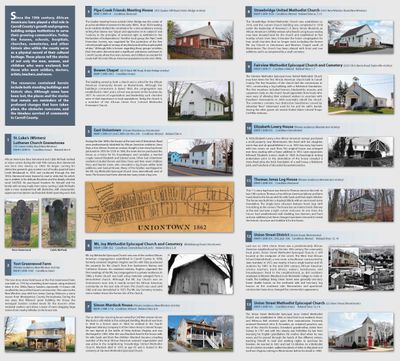
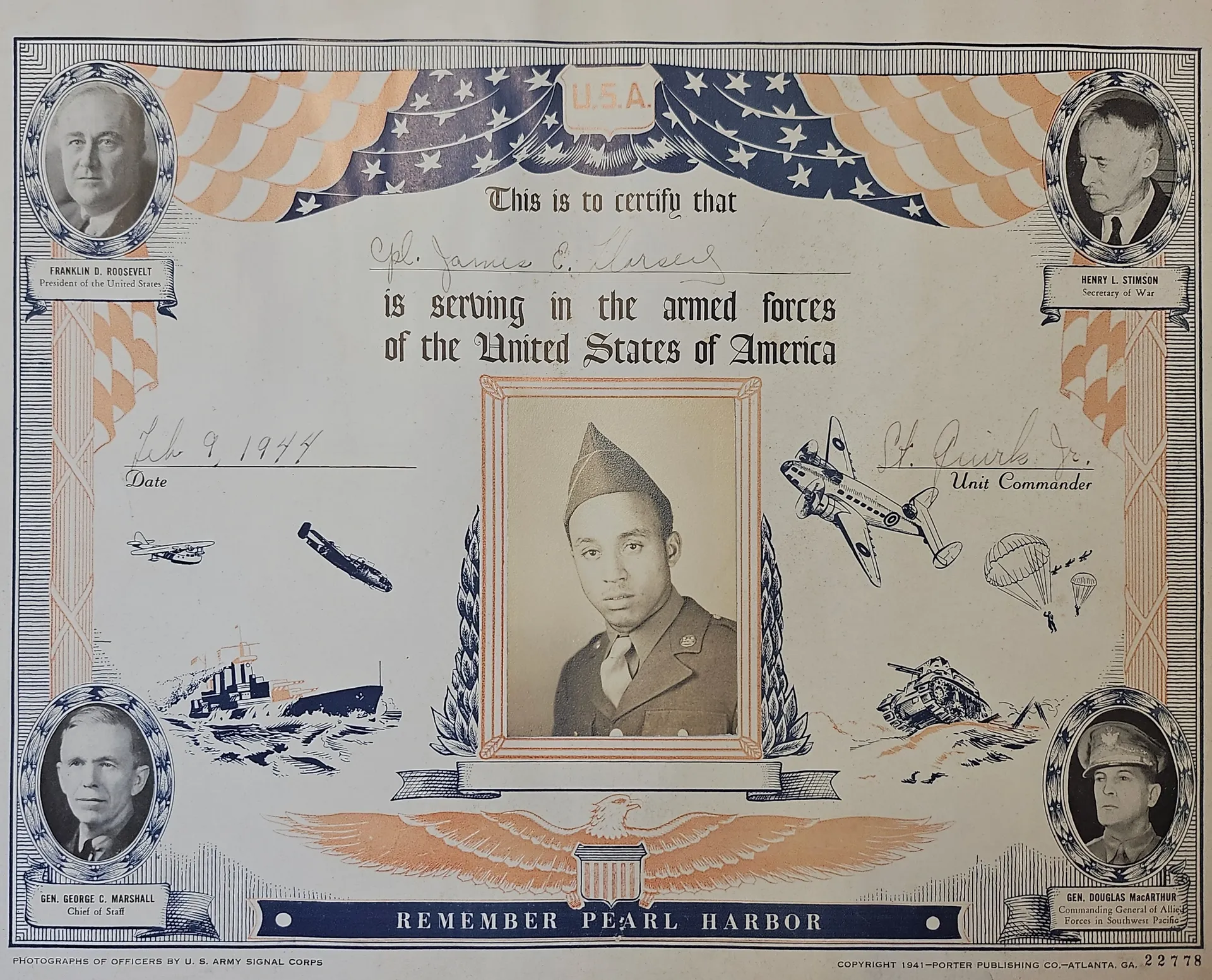
Corporal James E. Dorsey - U.S. Army
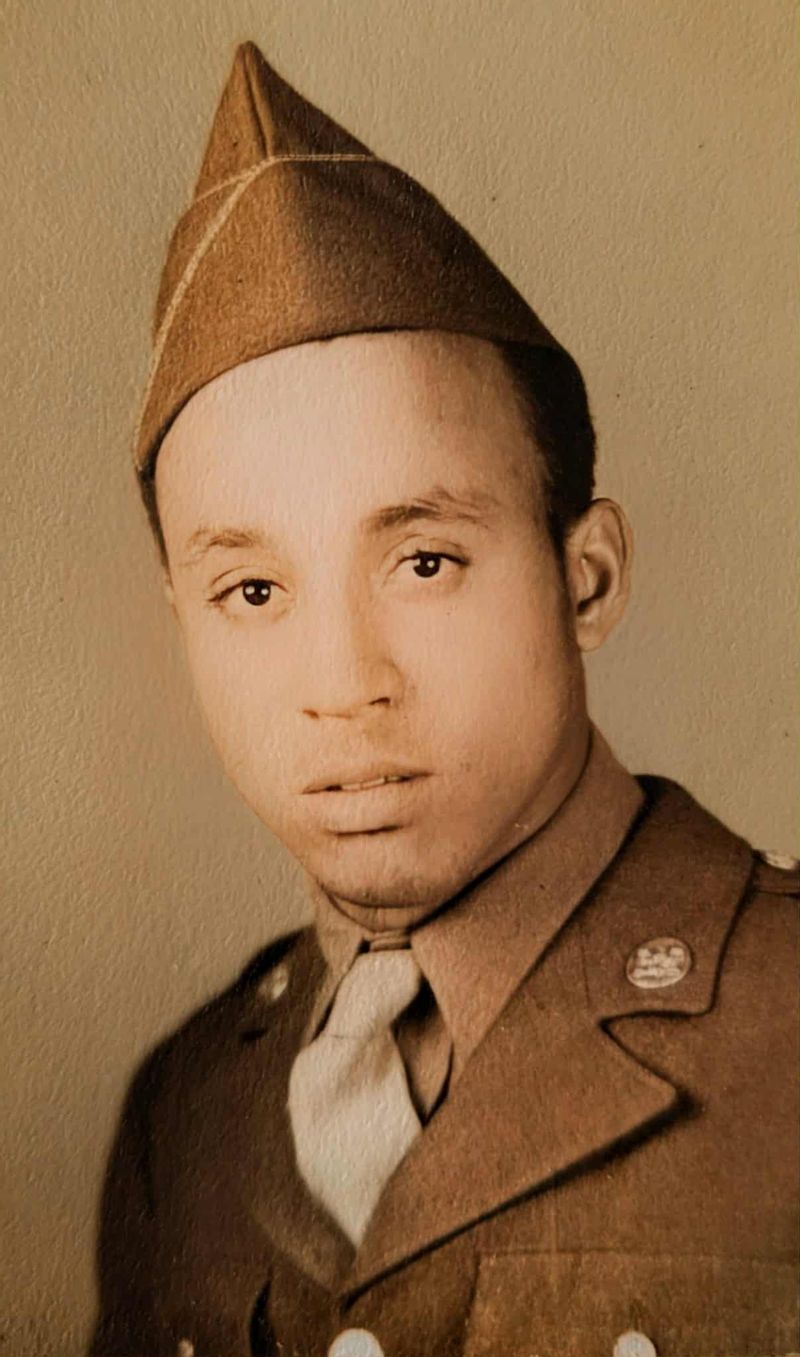
James Edward Dorsey, DOB 7/30/1923, Hometown of Sykesville, Maryland.
Served in the U.S. Army, Rank Technician Fifth Grade (Tech 5) in World War II.
He served as a Tech 5, providing skilled support in communications, mechanics, and medical services. Contributed to the Allied victory through essential support roles.
Exact unit and battles are not documented, but his service reflects bravery, dedication, and commitment to his country.
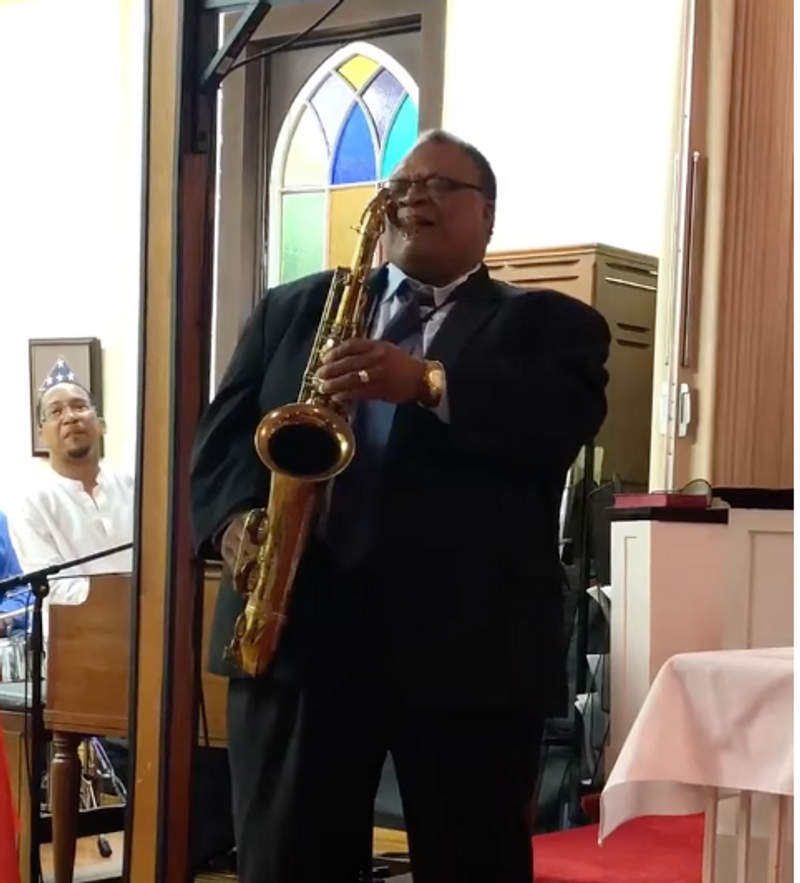
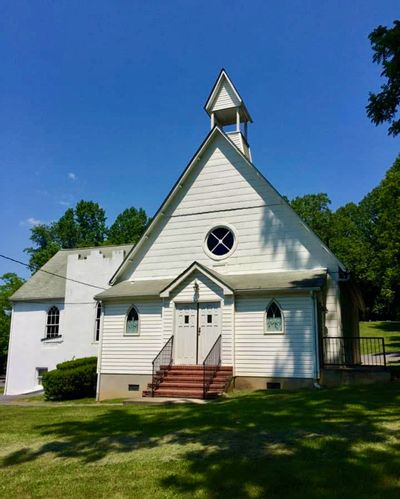
Brad Collins shares the story of the communities at Johnsville UMC and St. Luke UMC — places that have nurtured generations of leadership, mentorship, and belonging in the Sykesville area.
It’s a powerful reminder that behind every town are the communities that helped build it.
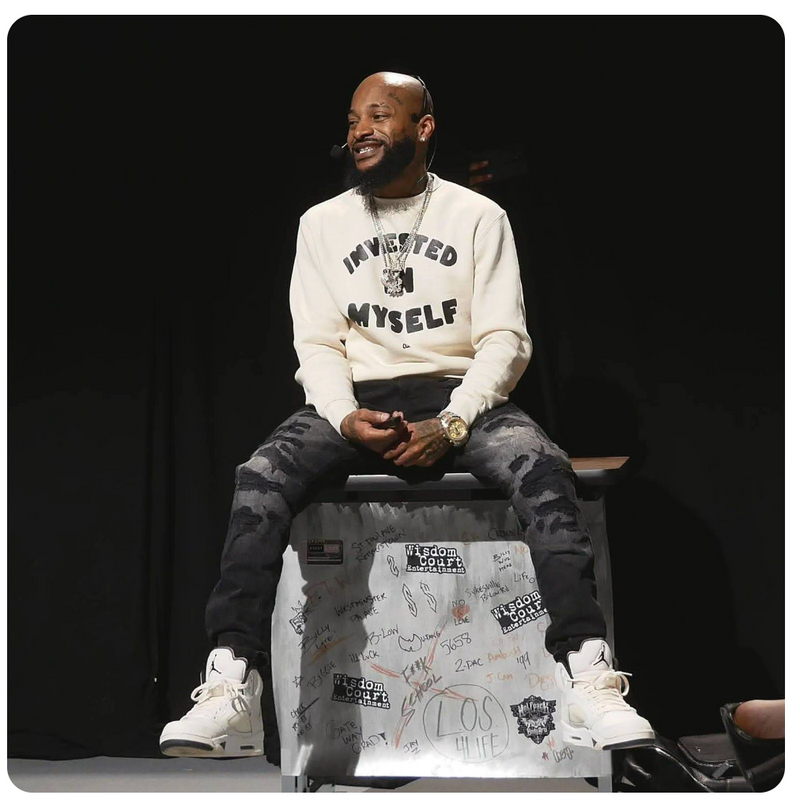
Billy’s own journey is a powerful example of this mindset in action. Named one of the 25 Black Marylanders to Watch in 2025, Lyve has taken adversity and turned it into purpose. Growing up in a home marked by instability and family struggles, he could have been defined by those circumstances—but chose instead to fight through them and channel that experience into helping others find their voice and direction.
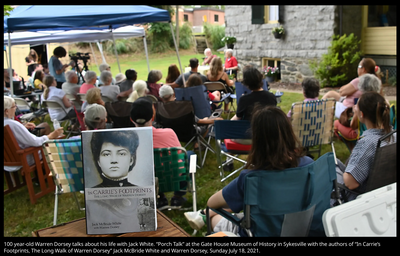
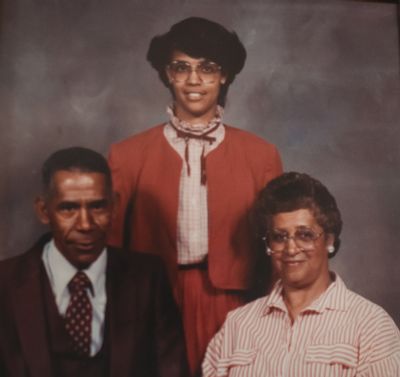

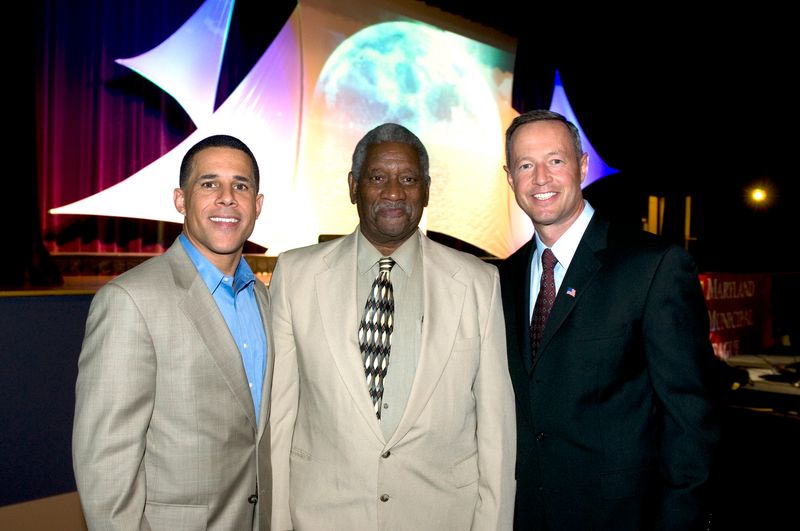
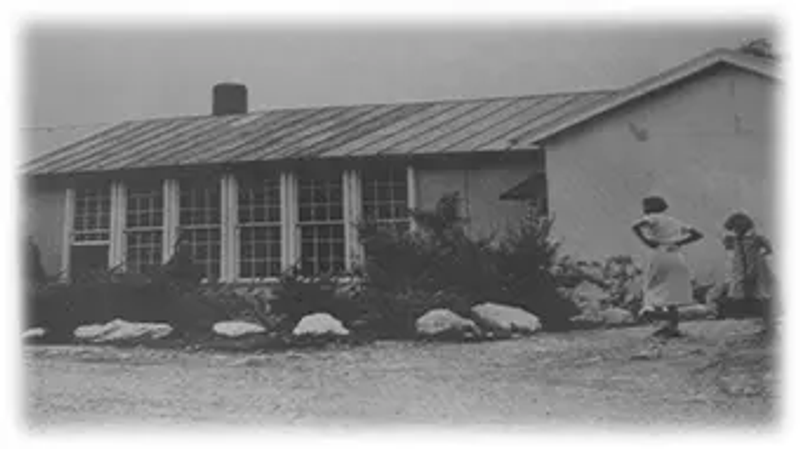
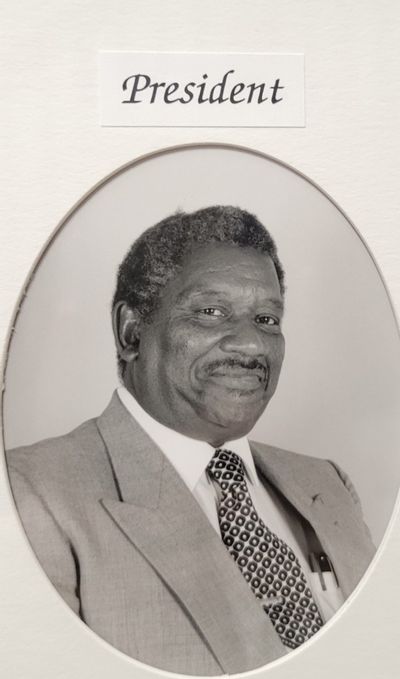
Mr. Eugene Johnson Sr. lived in Sykesville most of his life. He is one of 14 children. He is married to Mary Johnson, and they have two adult children, three grandchildren, and two great-grandchildren. Mr. Johnson lived for about 12 years in what is known as the Colored Schoolhouse in Sykesville, Maryland. He moved his family there in the late 1960s.
The Colored Schoolhouse started as a school for Black children during segregated times, on January 4, 1904. It was sold in 1939 at an auction and converted into a residence.
Mr. Johnson lived in the schoolhouse residence, which was in a neighborhood of Black families. None of the homes had indoor plumbing or running water. Mr. Johnson met with some contractors that he knew around 1975, with blueprints, to negotiate having housing built with plumbing and running water for low-income families. It took about three years (1978) before it was approved to be built.
In 1981, the Schoolhouse Road development was created. Twenty-six (26) three-bedroom townhomes with plumbing and running water were ready to be lived in. Mr. Johnson and his family were one of the first to move into the new homes. By 1982, all twenty-six (26) homes were occupied in the now integrated neighborhood. Leaving the schoolhouse behind was not easy, but Mr. Johnson said that he would always make sure that the house remained standing for historical purposes.
After settling into the new townhome and neighborhood, Mr. Johnson began to run for Town Council in Sykesville. He was elected for his first term in 1985. Mr. Johnson served as a councilman and as the President of the Council throughout his long 24 years on the board. Mr. Johnson retired from his councilman duty in 2009 but remains a big part of the Town of Sykesville. His pictures with his years of service on the council are hanging on the wall at the Sykesville Town House.
The Colored Schoolhouse building, now standing unoccupied since 1982 and slowly deteriorating, became a target and was repeatedly slated to be demolished. Mr. Johnson, with the help of the Town of Sykesville, went to meetings with the county and fought to keep the only Black schoolhouse in Sykesville standing. In the mid-1990s, restoration began on the schoolhouse.
Today, it still stands and is utilized for historical field trips for schools and organizations. Best of all, it is used for the Homework Club. The club was organized by Mrs. Pat Greenwald and other retired teachers to assist all children in the area with their homework throughout the school year, providing guidance and support for various activities and helping prepare them in the summer for going back to school.
Mr. Eugene Johnson, now 86 years old, remains involved in the town and is very proud of what Sykesville has become. He believes in what we all know the town will continue to be—a wonderful, small, diverse town where all people are welcomed, included, protected, and loved!
Mary Castle
Pictured right to left: Lieutenant Governor Anthony Brown, Eugene E. Johnson, Governor O'Malleyh
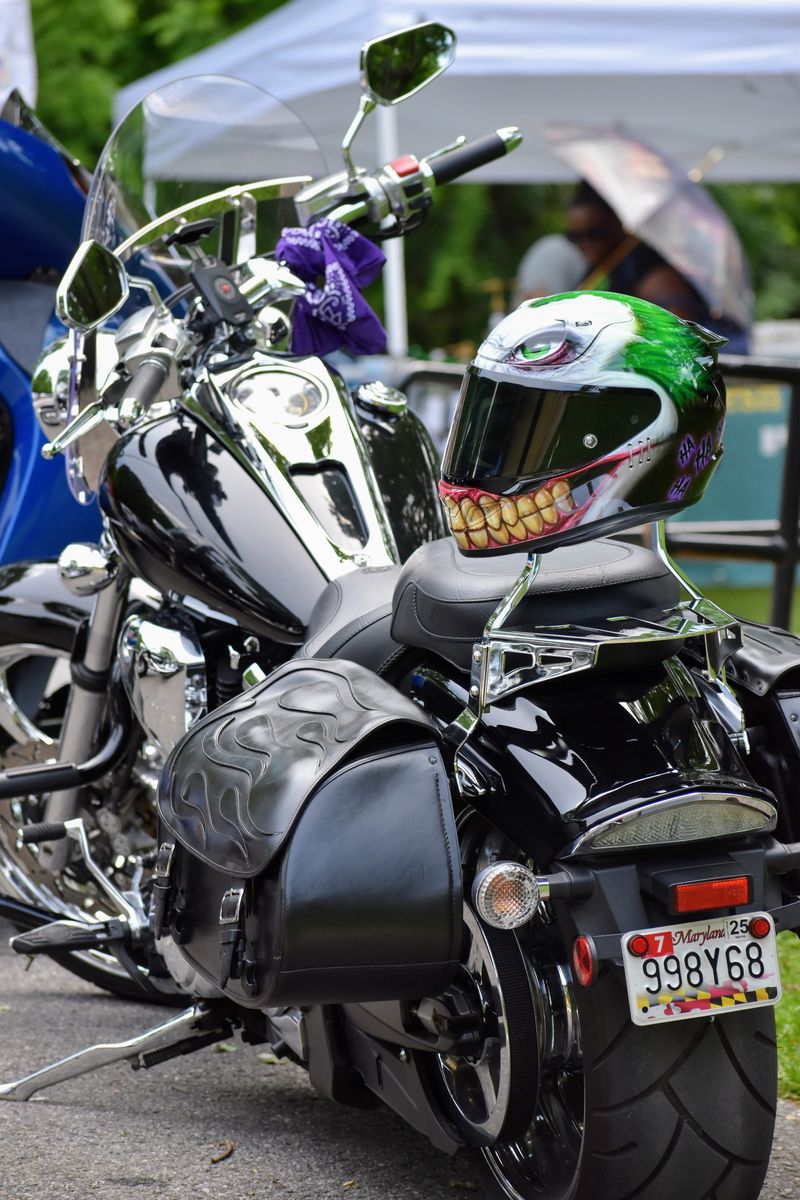
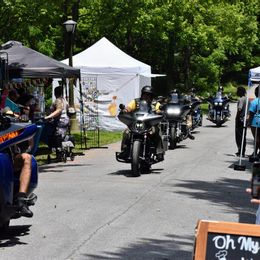
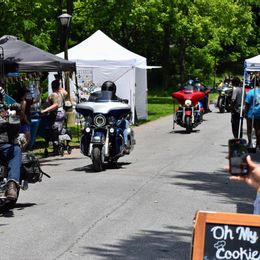
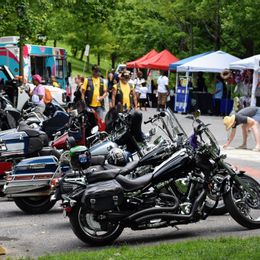
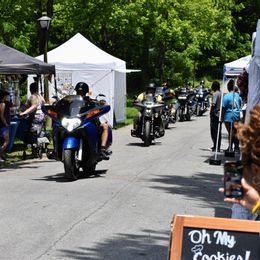
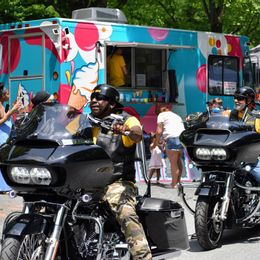
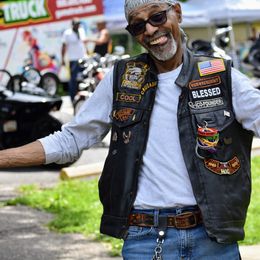
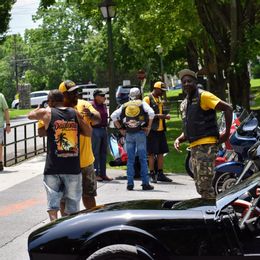
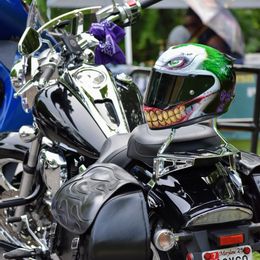
A Long-Standing Presence in Black Motorcycle Culture
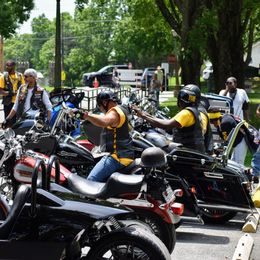
The Crusaders Motorcycle Club of Eldersburg is more than a group of riders—it's a community rooted in history, fellowship, and shared purpose. Originally formed in 1975 by Norman Collins Jr. and a group of nine young riders, the Crusaders built a legacy of camaraderie and presence on the road. Over time, the club evolved, experienced shifts in membership, and was revitalized in the mid-2010s when original members like Double “0” returned to reignite its spirit and traditions.
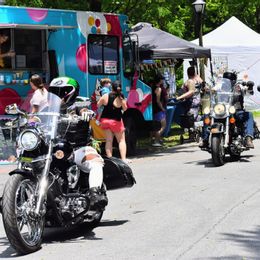
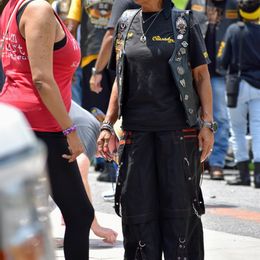
Today, the Crusaders MC gathers members around brotherhood, organized rides, community fellowship, and shared enthusiasm for motorcycle culture. Their presence extends beyond the road—they actively participate in local events such as Sykesville’s Juneteenth celebration, bringing vibrancy, visibility, and connectivity to Black cultural moments in the region.
Through decades of continuity, reinvention, and community engagement, the Crusaders MC reflects how local organizations help shape and overlay cultural life in towns across Maryland. Their ongoing story is one worth telling, remembering, and celebrating.
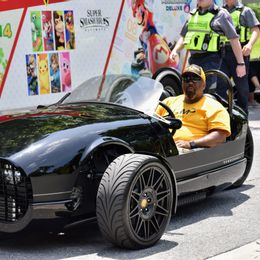
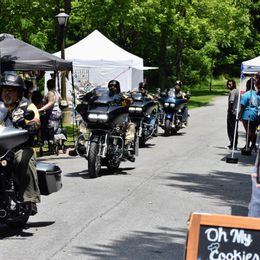
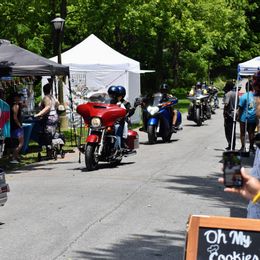
The Crusaders at the 2025 Sykesville Junettenth Celebration

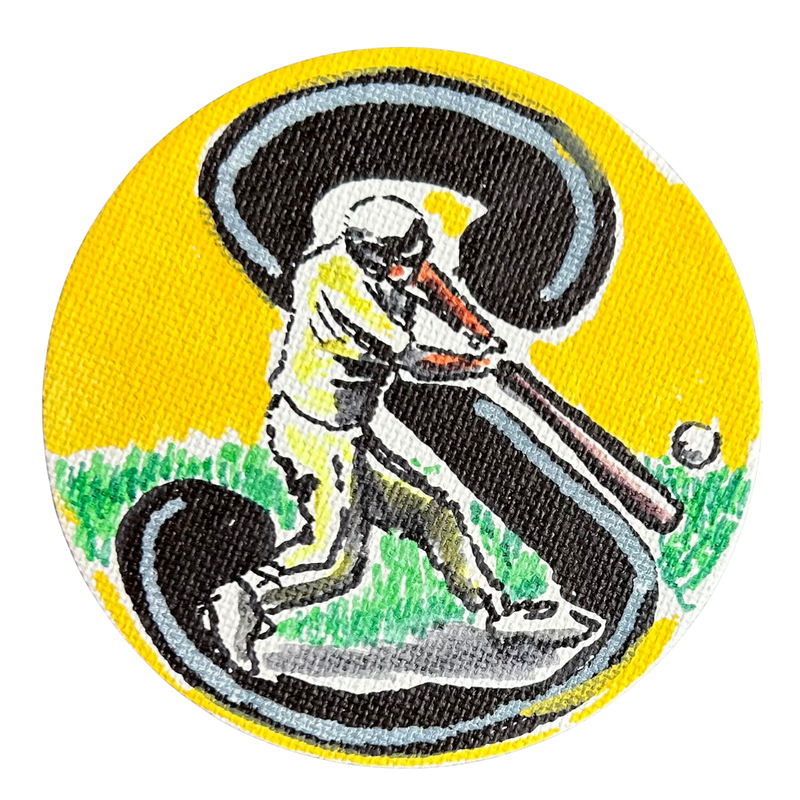
Most people have probably never heard the names of Clendan Savoy and Kick Lewis. Or Roger Anderson, Gene Norris, and Russell Dorsey. These players did not compete at the level of the professional Negro Leagues, but they were gentlemen who loved baseball and yearned to play the game as members of the Sykesville Giants.
The Sykesville Giants were founded in 1915, five years before the official formation of the Negro Leagues. They played on Saturdays and Sundays on a home field surrounded by trees and built on undeveloped land. It was a basic field—no fences, no bleachers, no scoreboard. Since there was no formal seating, spectators often brought picnics and set up parties around the field.
The players purchased their own gloves and uniforms. Their opponents were other Black teams who traveled to Sykesville to take them on.
Clendan Savoy, a right-hander, was the team’s ace pitcher.
He threw to Gene Norris, the team’s catcher, whose father Jim Norris played third base and was the team’s elder statesman.
On the right side of the infield were Raymond “Big Raymond” Lewis at first base and his brother Kick Lewis at second.
Russell Dorsey, 5-foot-4 and 135 pounds, held down shortstop with outsized talent.
In the outfield: Roger Anderson (left), Clarence Green (center), and David Grooms (right), known as the fastest man on the team.
Illustration by Wade Forbes
The Decline of the Giants
The Giants were the sole tenants of their field for many years and continued playing for nearly two decades. But eventually, a series of events forced them off their field:
A jousting competitor began using the first-base line for practice runs.
Local merchants began dumping refuse on the field.
By the mid-1930s—more than 10 years before Major League Baseball was integrated—the Sykesville Giants were gone, and their field had become the town dump.
Many players eventually moved away. Of the starting nine, only Clarence Green and Gene Norris remained in Sykesville for their entire lives.
Though all the players have since passed away, the legacy of the Sykesville Giants lives on. The Norris family—whose members included catcher Gene and third baseman Jim—was honored many years later when one of the town’s main thoroughfares was named Norris Avenue. Descendants of the players remain in Sykesville today, living proof that the Giants will forever be a part of this town’s story.
References
As Black History Month comes to a close, our commitment to uncovering and sharing the untold stories of Sykesville’s Black community continues to grow! We’re thrilled to share that at Monday’s meeting, the Town of Sykesville officially adopted a proclamation recognizing February 2025 as Black History Month, with the theme “African Americans and Labor.” This critical step was passed with overwhelming support, demonstrating dedication to celebrating contributions that shaped our community.
Want to hear Mayor Link read the proclamation? Tune in at minute 43 on the Mayor and Town Council video!
Beautiful things are happening in Sykesville—let’s keep the momentum going! #BlackHistory #SykesvilleHistory #HonoringThePast #BuildingTheFuture